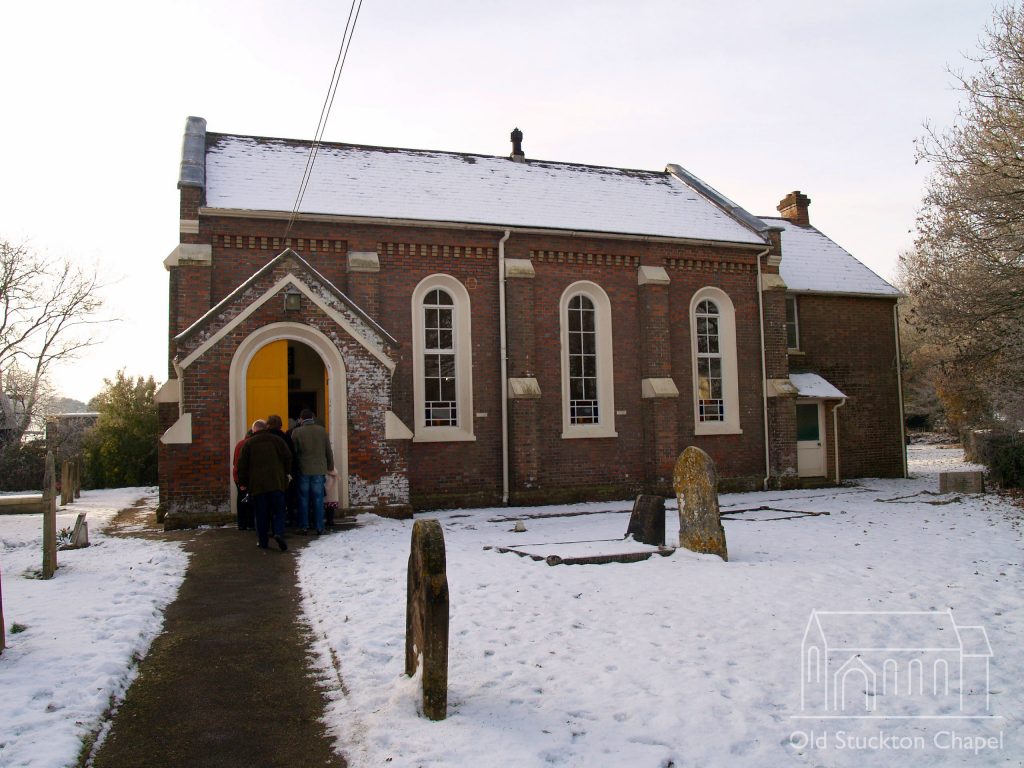
It is believed the main hall and porch date from 1856, with the school room extension on the right hand side (with meeting room above) added later. It is unclear if the part of the building that extends to the south (formaly the vestry and latterly with kitchen and toilets) is original or not.
Of brick construction and under a slate roof, the building is finished with stone blocks to the buttresses. It appears the major fabric of the building has changed little over the years, although the building has evolved to meet the needs of the congregation and with the advent of new technology such as electricity. This page includes pictures of the chapel over the years and notable changes, which in turn helps us identify the chronology.
Oldest Picture?
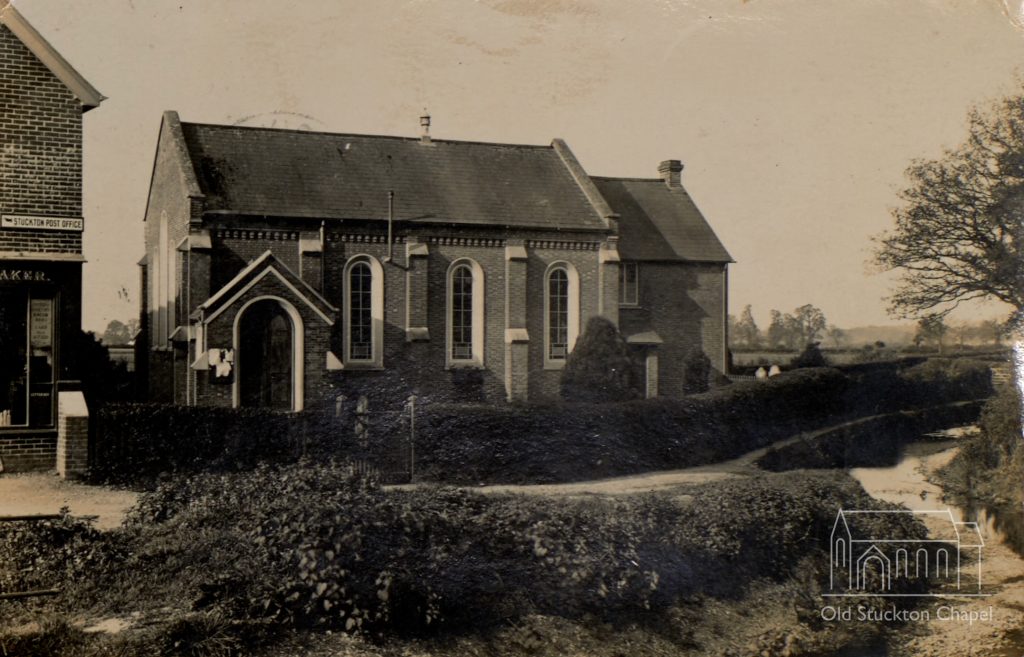
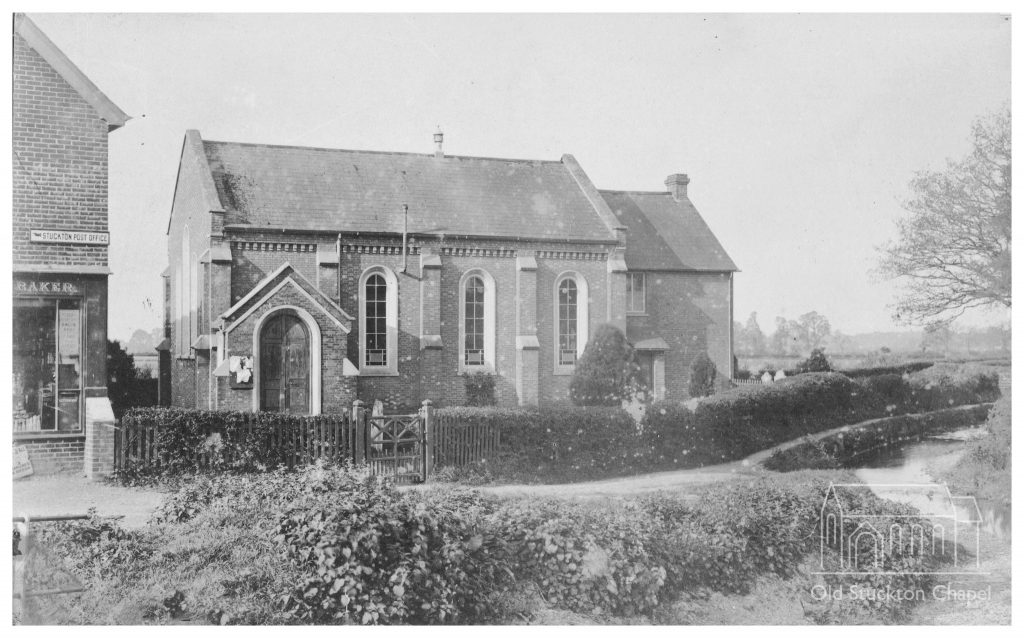
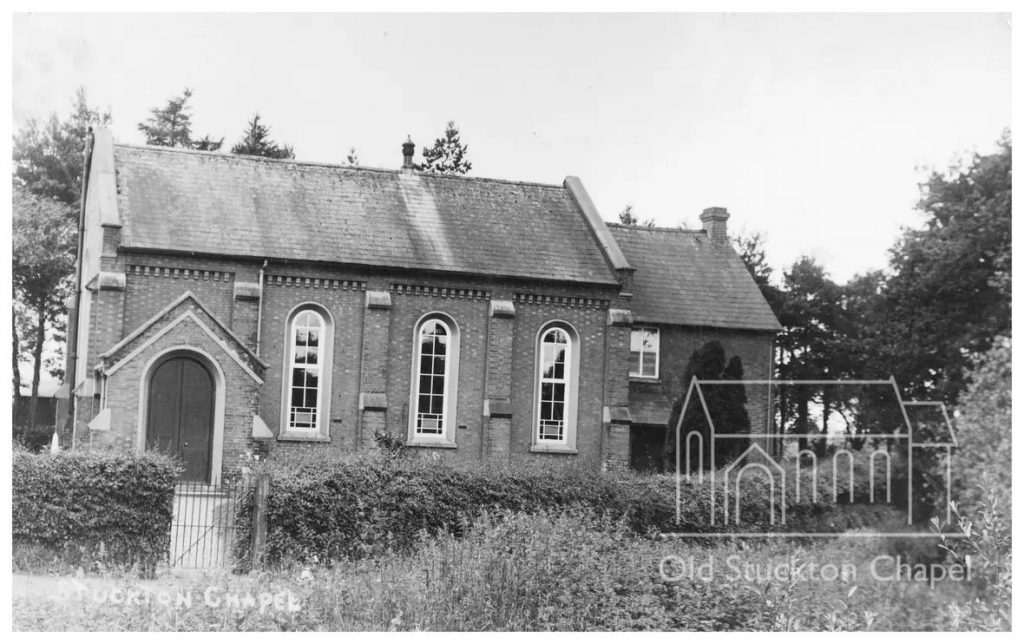
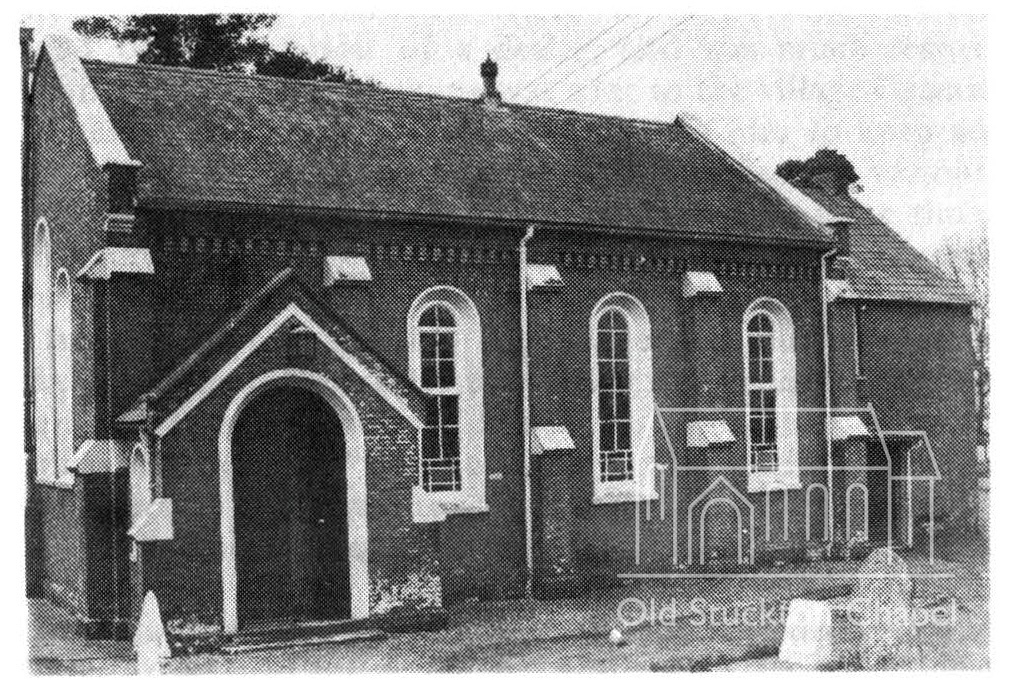
We believe this to be the oldest picture we currently have of the chapel. A cropped version of this image was used in the original 1956 version of the history booklet. We seen a number of different versions of the picture from different sources, hence why there are two copies above which give different detail due to the alternative contrast and brightness of the source images, likely an artefact of their reproduction as individual photographic prints!.
In both the 1956 booklet and another source it is dated 1906.
A few things to note include the stove flue up emerging to the righthand side of the porch; you can also see the two outer long windows on the front elevation have yet to be modified to open. The noticeboard is also fixed to the lefthand side of the porch, and the gate at the front is clearly wooden rather than the later metal gate which is still there! It is details such as these that have been useful to understand the chronology of other pictures.
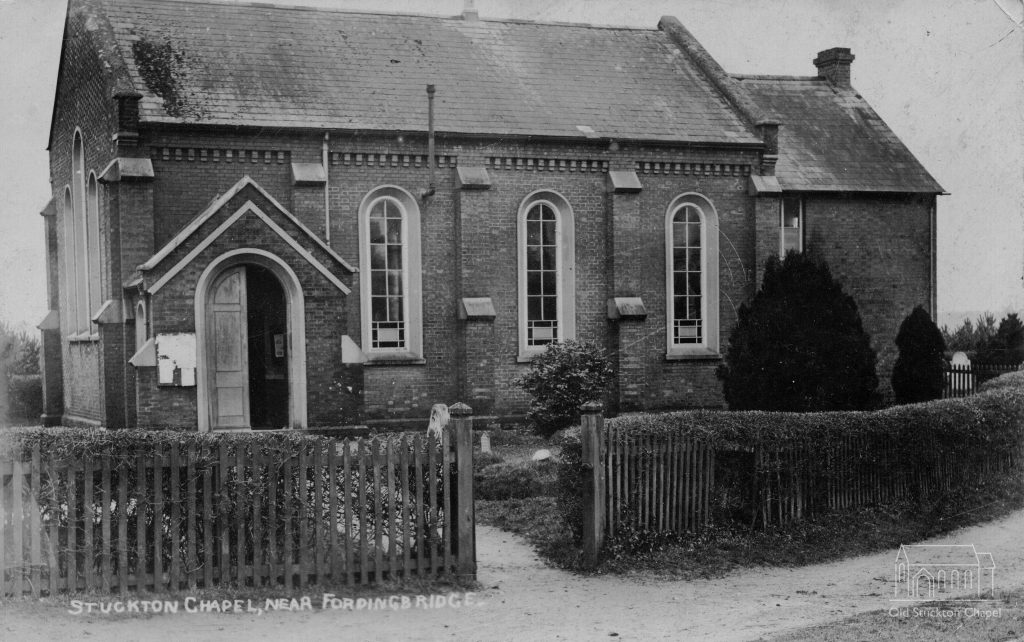
This photograph is likely to be from a very similar time, and the working assumption is that its ever so lightly later, that the above as their is more moss on the roof, the bushes to the right are somewhat larger, and there is clearly a recent interment just to the righthand side of the path inside the gate. This is however countered by the more limited growth in the hedge at the front (particularly to the left), but this may have just been from a hard trim.
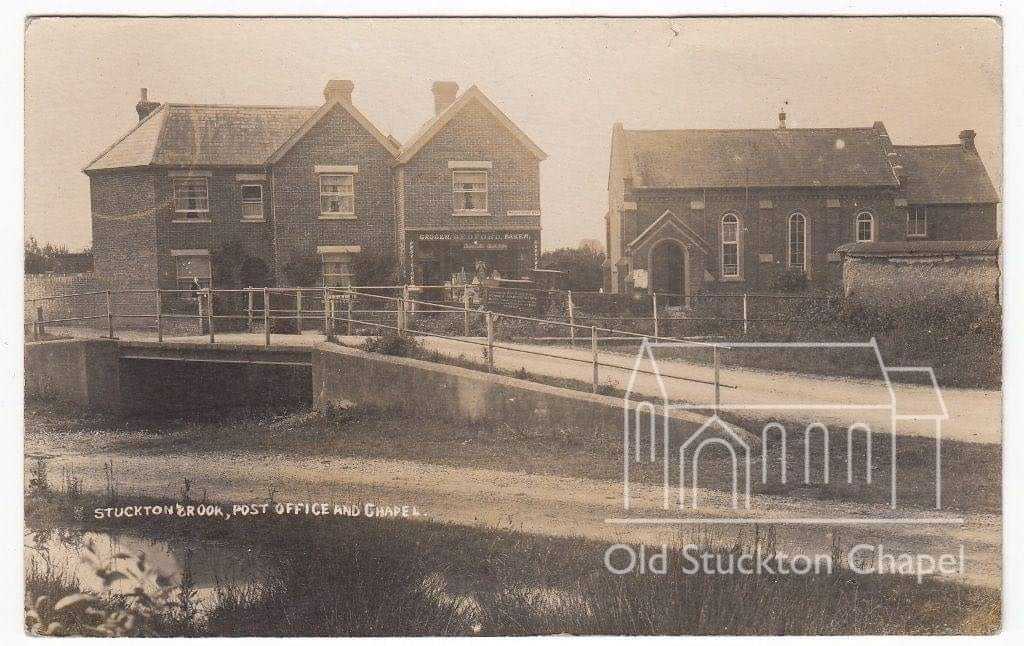
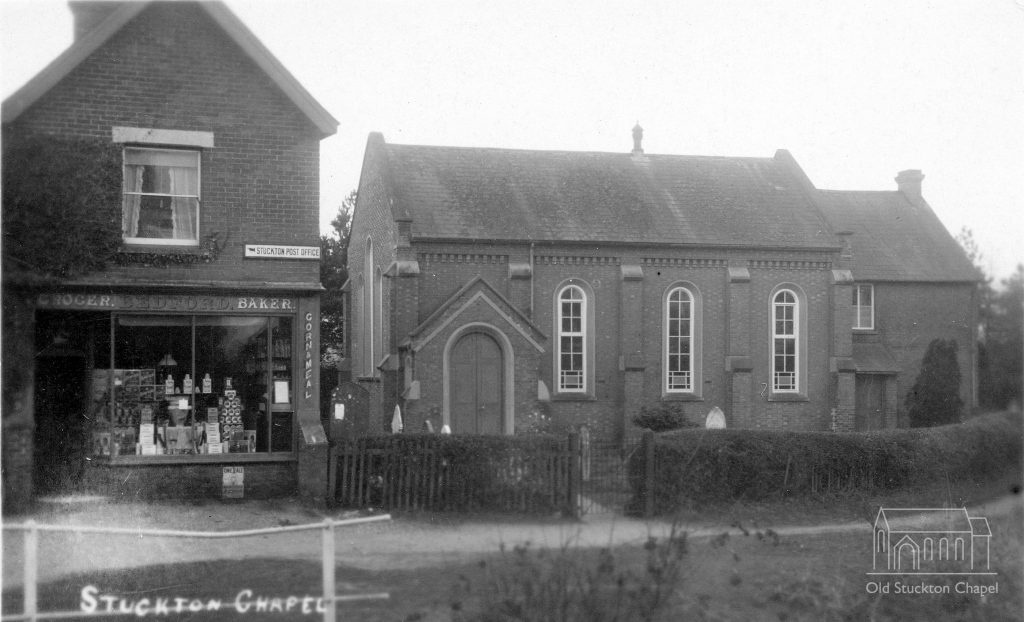
This postcard of the chapel and the post office is clearly later as the modifications to the two outer long windows on the front elevations to enable them to open is clear to be seen. However the stove heating flue is still in the same place, and there is a noticeboard fixed to the porch.
We have been told a copy of this postcard was postmarked in 1911!
Changing Over Time
The chapel clearly had to evolve over time as things changed; in the previous photograph we saw how the upper section of the two outer large windows at the front were modified to open, and can now see the flue for the stove to the righthand side of the first window has been bricked up.
There is now a significant new flue to the end elevation on the right, supported by a new brick plinth at the base. This plinth was obviously turned into a small buttress (still extant today) after the flue was removed.
The gate at the front is also now a metal gate, we believe the same that remains today. There are no electrical wires yet.
This image on the right is taken from the front cover of the 1981 version of the history booklet, and the quality is relatively low. However it appears to show the chapel at an interesting point, in that the flue to the end elevation to the left remains, but it appears electrical cables are flying over the front of the building too.
Of note you can also see the memorial to Rev & Mrs Baines, who both passed in 1951, in the foreground of the image – clearly dating the image after this time but before 1981 when the history booklet was published.
This image is an enigma; we are unsure how this fits in terms of chronology. The previous flue to the front is clearly bricked up, but there is no sign of the flue to the left hand end wall or any electrical cables flying over which appear in the image above!
Could this actually be some period between the old flue being removed and the new system on the end wall installed? Or is it later – as suggested by the greater number of visible memorials at the front on the left,
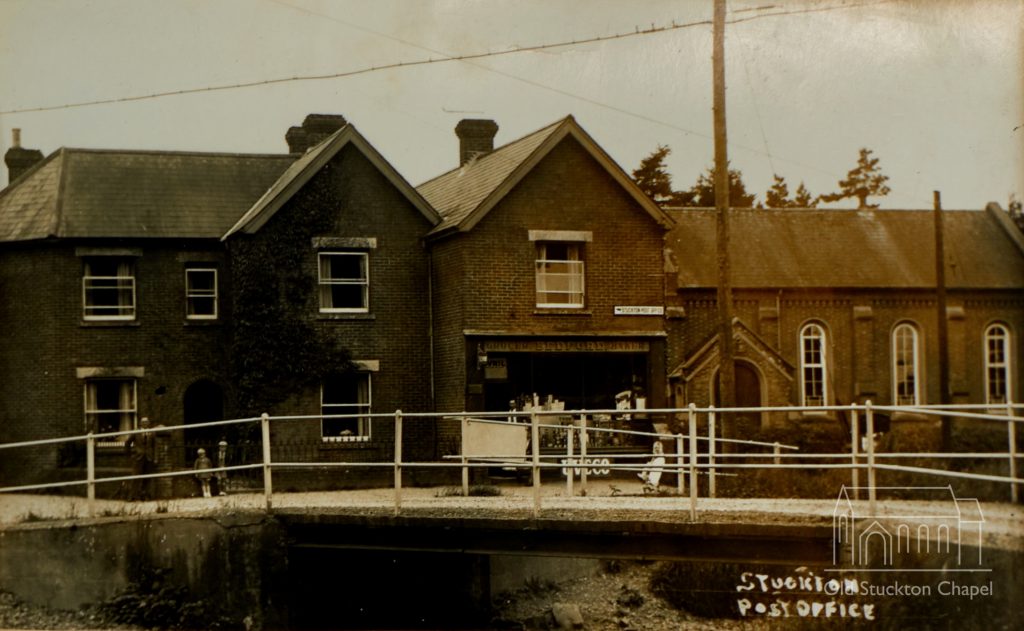
It does have the modern metal gate, and the noticeboard is clearly visible at the front boundary next to the postoffice.
This is believed to be one of the most modern of the black and white photographic postcards, particularly based on the clear deployment of telegraph / power poles.
As the focus of this image is the post office rather than the chapel, there is limited other indicators visible.
More Modern Times
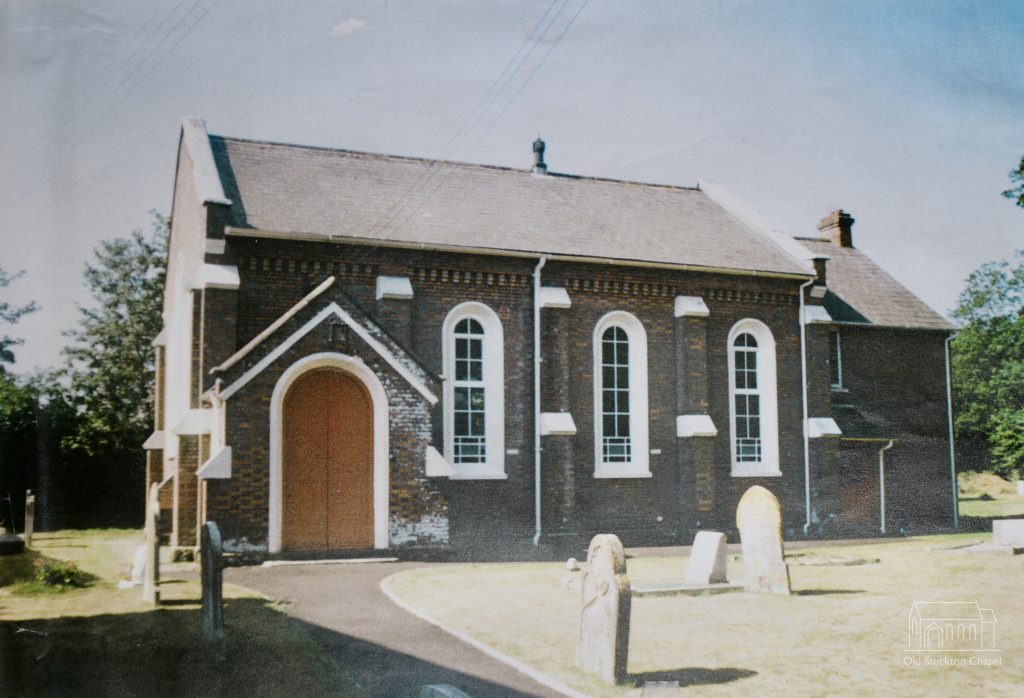
This photograph is taken from a scrapbook, and we believe is the earliest colour photo we have of the chapel we have found.
We estimate this is from the mid nineties, on the basis of what appears to be a mound of earth and flowers adjacent to Mrs Edith Zebedee who passed in 1993.
It was also alongside photos of the 1995 carnival float – so likely taken at the same time.
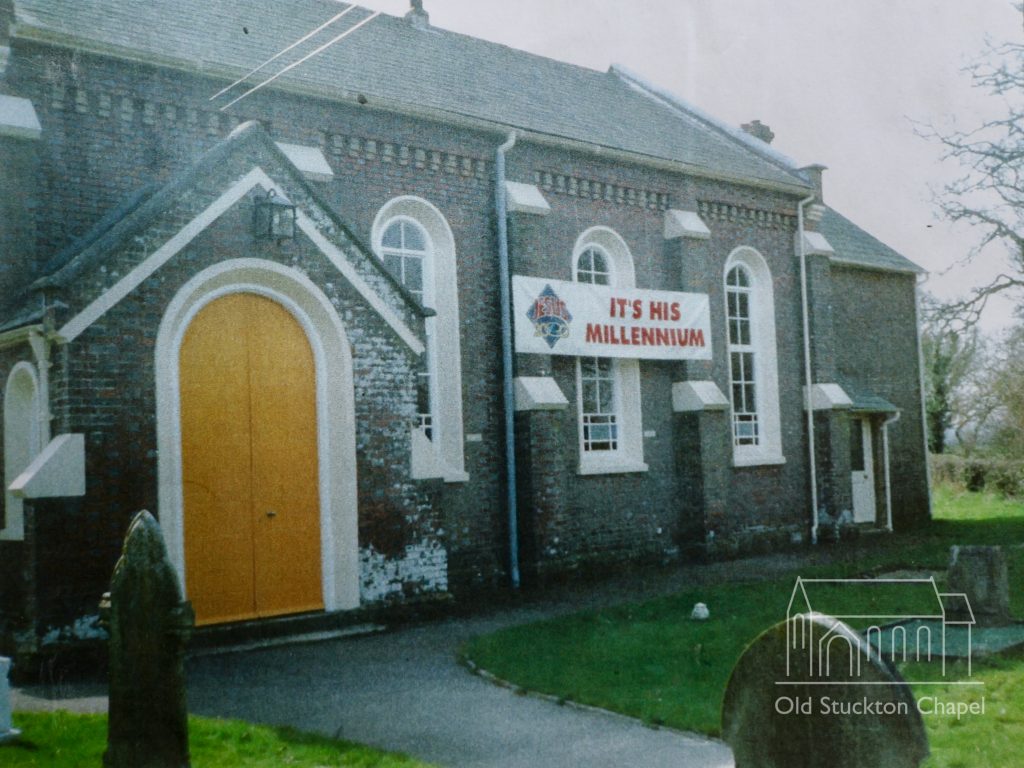
Taken from the same scrapbook, this photo is from the year 2000 when the new millennium was being celebrated and part of the new outreach activities detailed in the final 2006 edition of the history booklet.
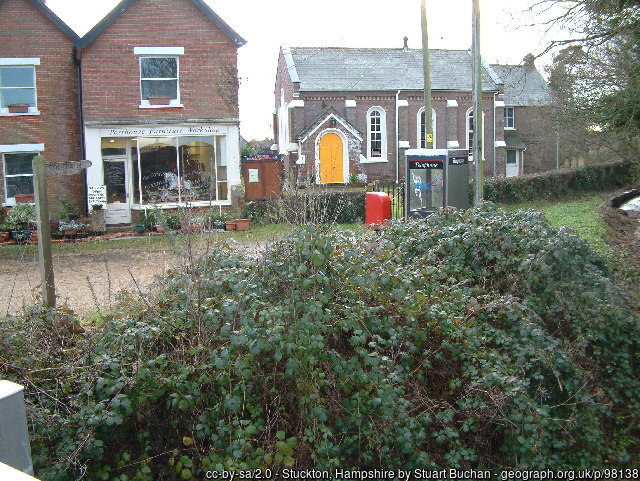
This photograph is taken from the Geograph.org.uk website, and one of the earliest of the location found on the site. In addition to the furniture shop still being open, the phone box is still in place along with the telegraph pole aside it.
The church noticeboard adjacent to the post office is also a significant size; it was later smaller and blue.
There are a number of further photographs on the Geograph.co.uk site, taken since this time.
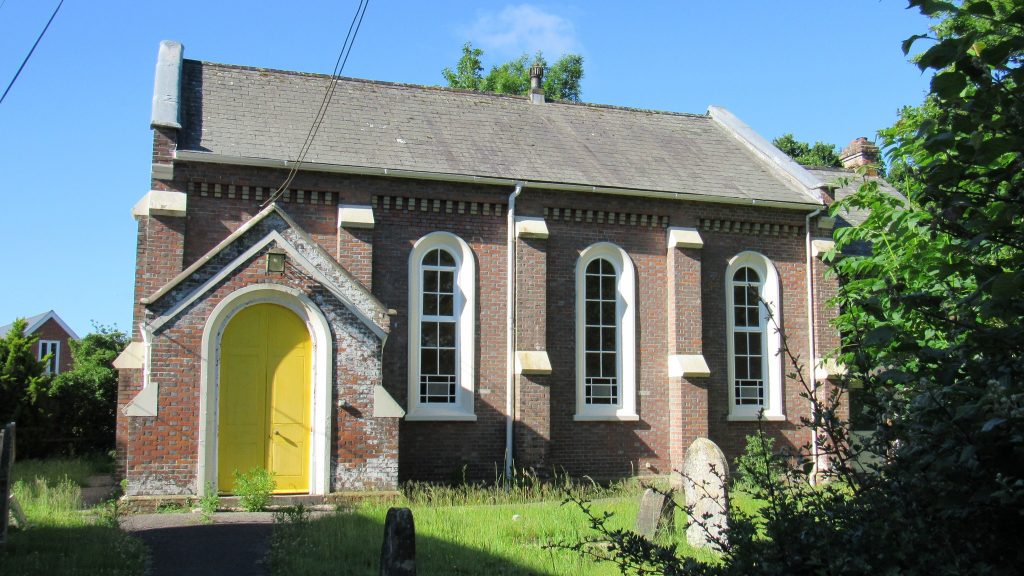
This is one of the last photographs we have found of the chapel before it was sold. Dated from October 2022 and found on Facebook, sadly the chapel is beginning to become overgrown.
Older Interior Pictures
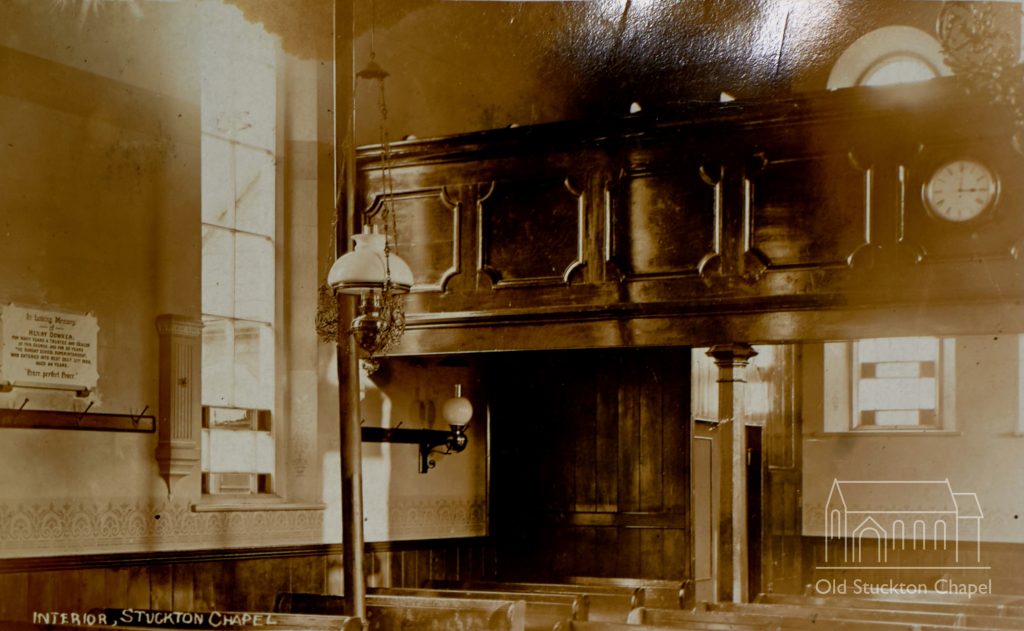
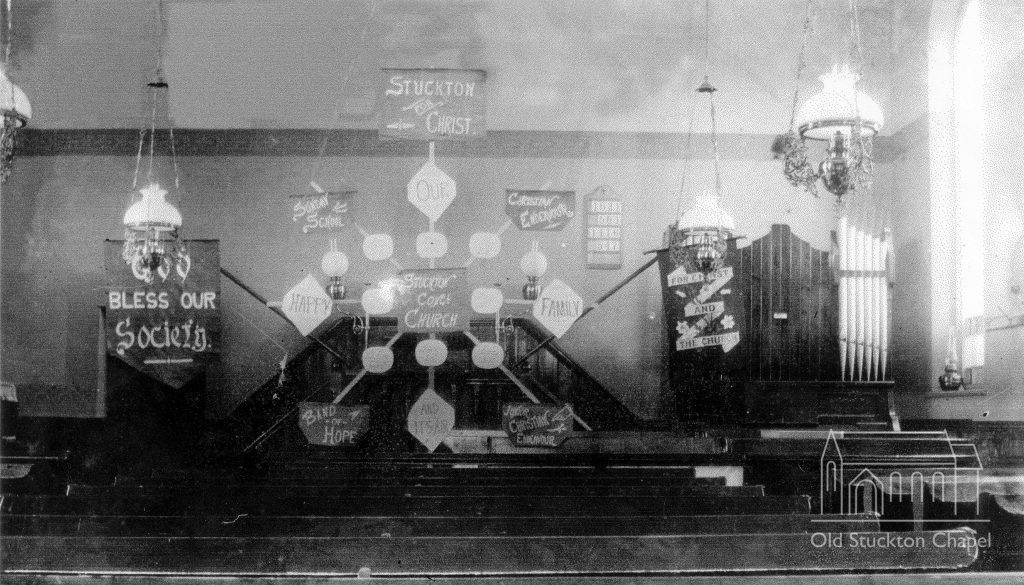
These two photos are likely to be some of the earliest, show the inside of the chapel with the stove in the middle of the chapel and the associated flue rising up before emerging out of the front elevation wall. Additionally at this point you can see in both of the photographs above the windows have not been modified to open. The photo on the right is clearly from an event and a display put together by the congregation; additionally it shows the pipe organ!
This photograph is a high quality version of the image shown in the original 1956 history booklet, labelled as being taken in 1920.
By this point the windows have been modified to open, although it’s not certain if the stove has been moved to the back of the chapel by this point as it is likely slightly out of the picture.
Note the pipe organ has now been removed, and a row of hooks are located on the wall in its place.
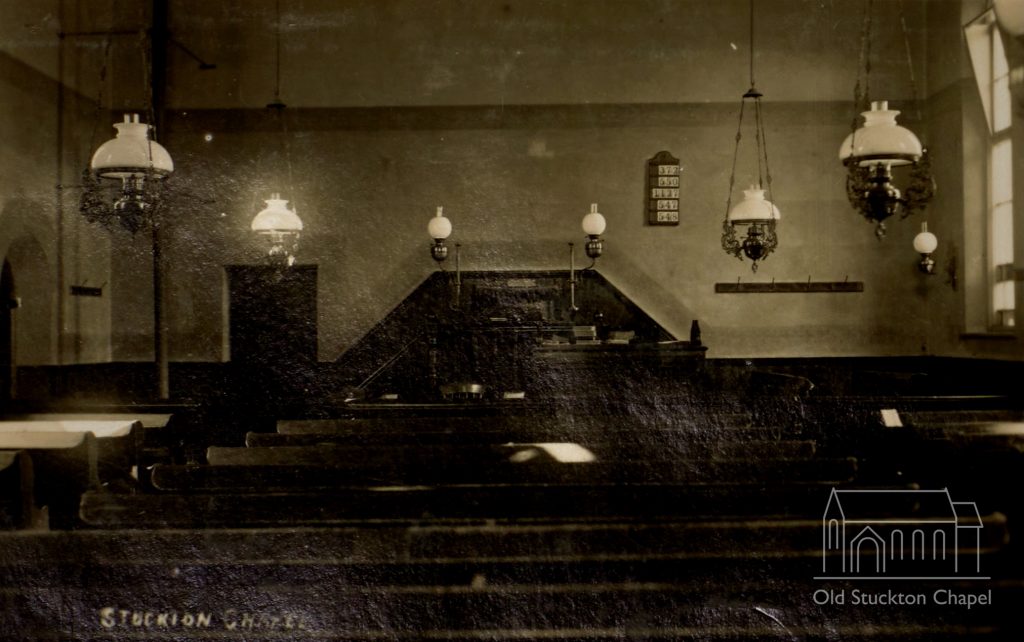
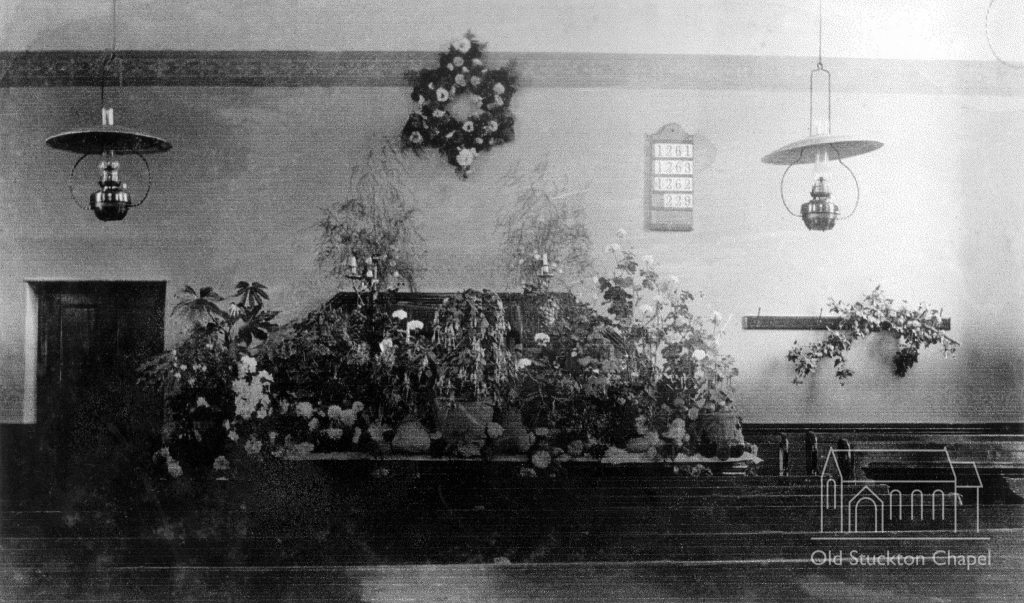
Another slight enigma, this photograph is very difficult to date. We believe this is after 1920 on the basis that there is no pipe organ (removed in 1913) and that the row of hooks are now in its place, and decorated for another event or festival.
Of note the oil lamps have been changed, so it is likely this is in the period between 1920 and the installation of electric lighting in 1937.
Alternatively – this could be the earliest photo predating all the others, and that the hooks predated the organ!
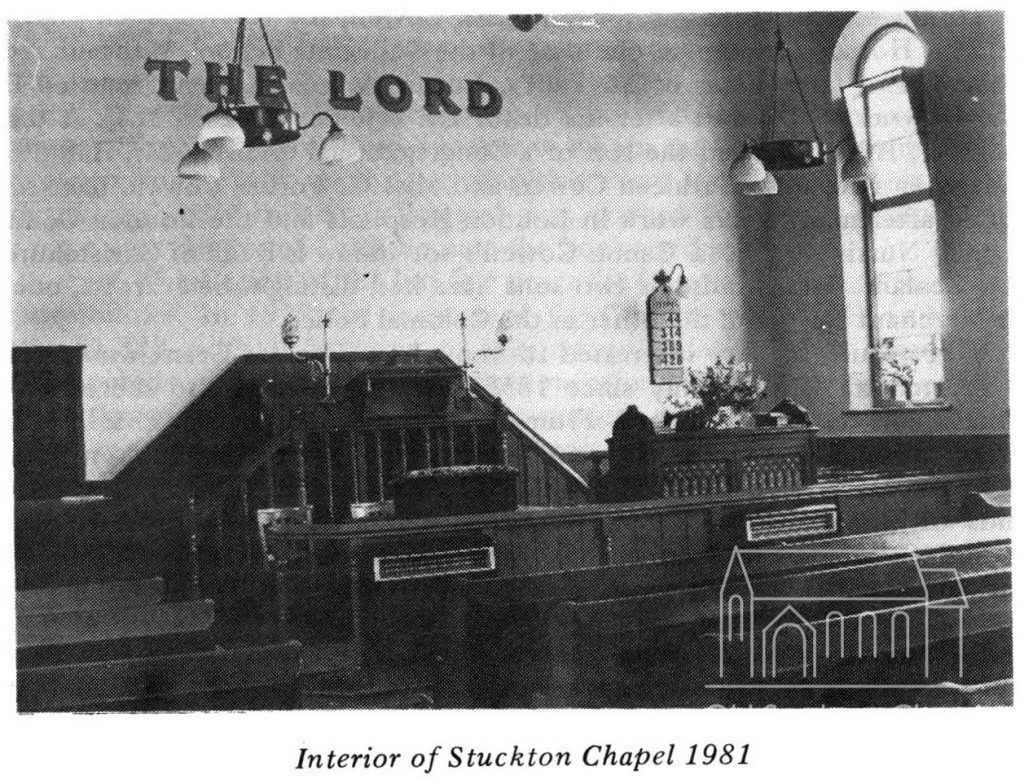
This photograph is taken from the 1981 version of the history booklet, and shows significant changes.
Specifically, the inscription on the wall behind the pulpit is seen for the first time, and the electric lighting can now be seen – the same fittings that have remained since.
The rail at the front of the dais can also be seen, with electric heaters mounted upon it.
Internal Renovations in 1997
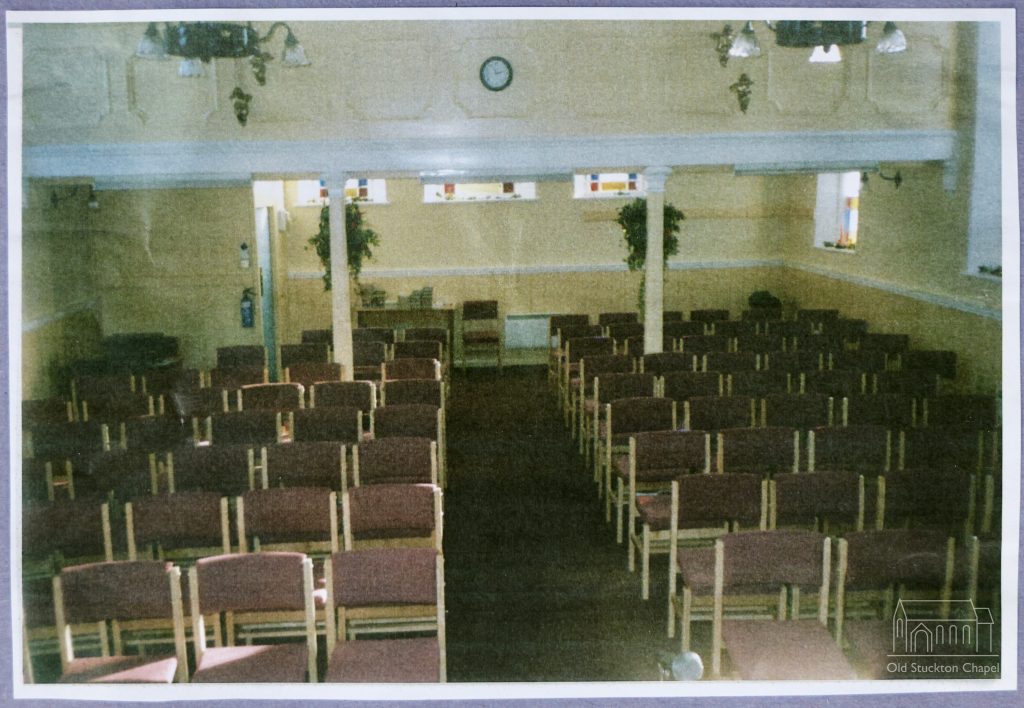
From the 2006 edition of the history booklet, we understand the last major renovation was undertaken in 1997, with redecorating, new heaters, new carpet and the replacement of the pews with fabric upholstered wooden chairs. Also at this time the ‘Holiness unto the Lord’ inscription over the pulpit was replaced by ‘Jesus Name Above All Names’, a gift from Mr. G. Sadler, the secretary and a signwriter.
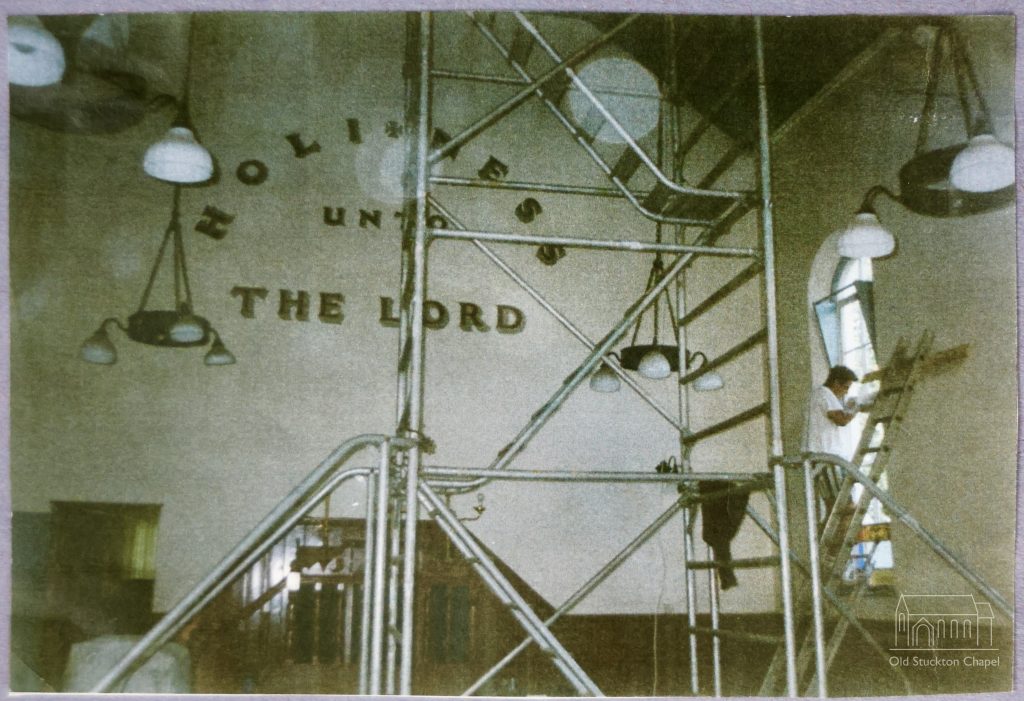
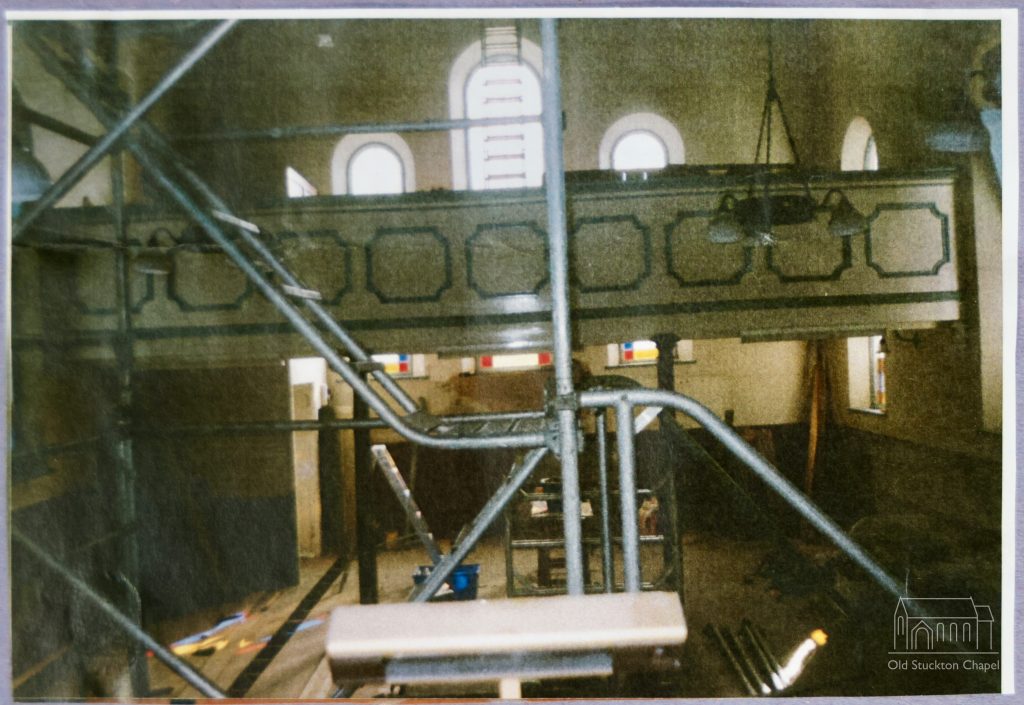
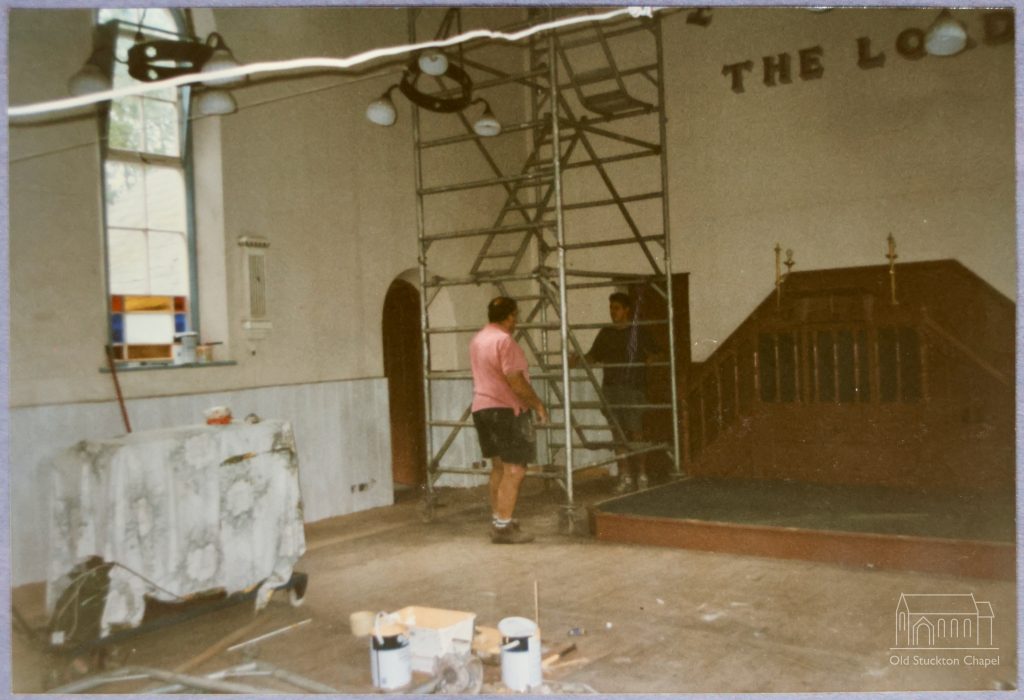
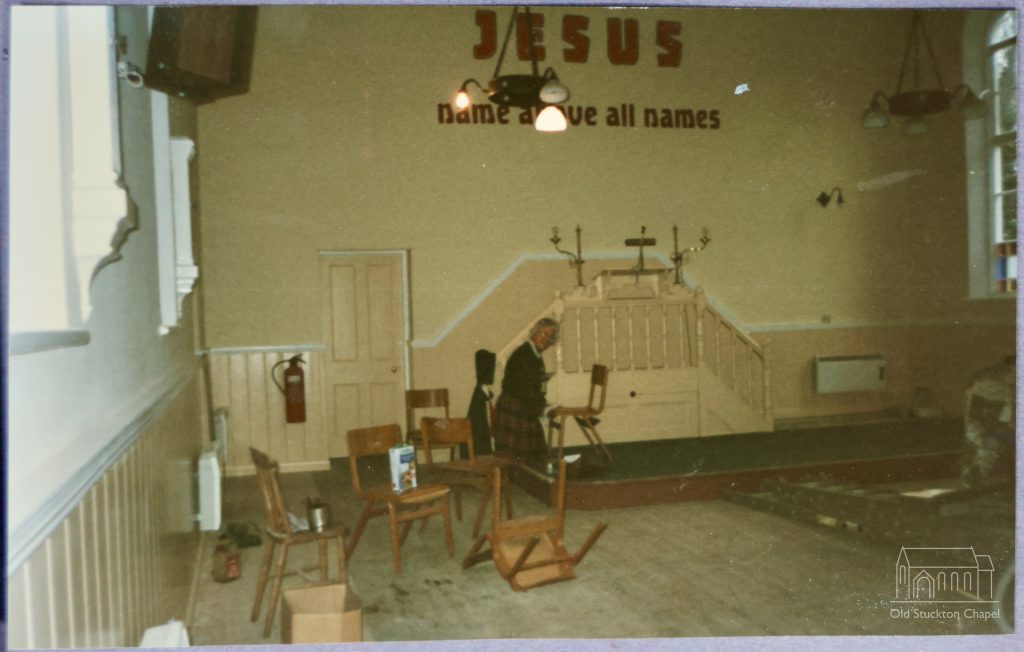
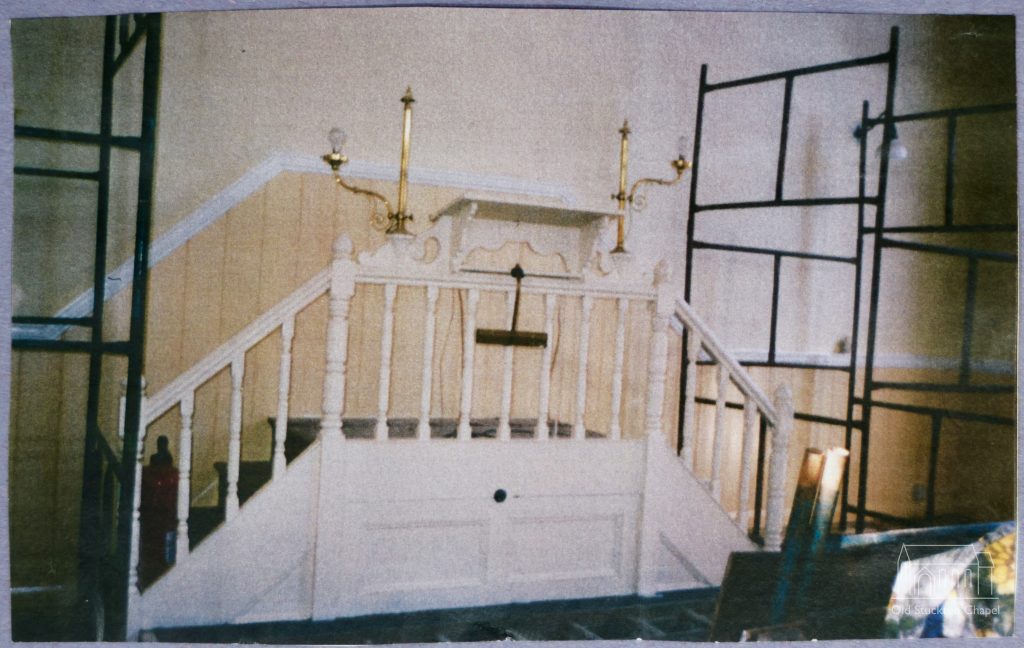
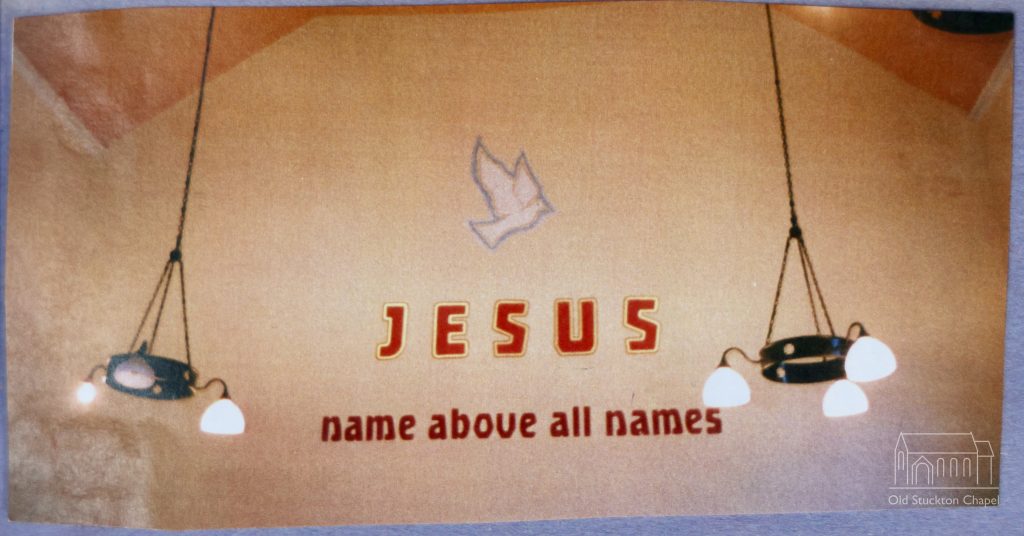
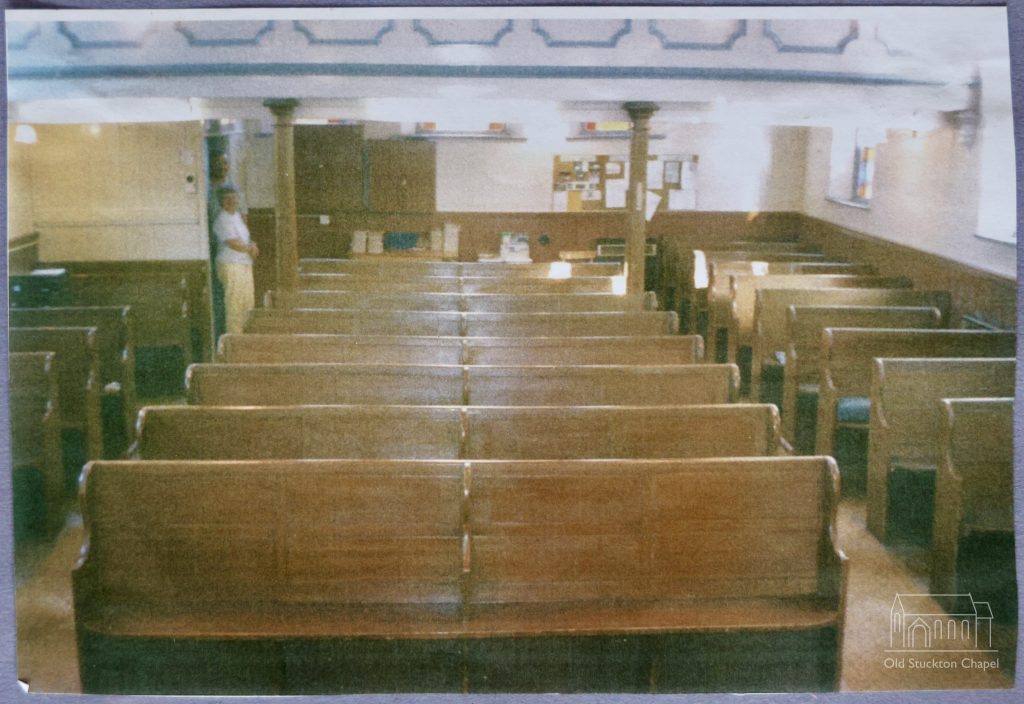
The following pictures show the wooden pews and the subsequent replacement with upholstered wooden chairs. We don’t know the fate of the wooden pews, but if one is lurking anywhere we would love to get one back in the chapel! Note the lady and gentlemen in the entrance doorway at the back in the pictures of the old pews, and the lady treating the chairs during the renovations. Does anyone know who they are?
Flooding!
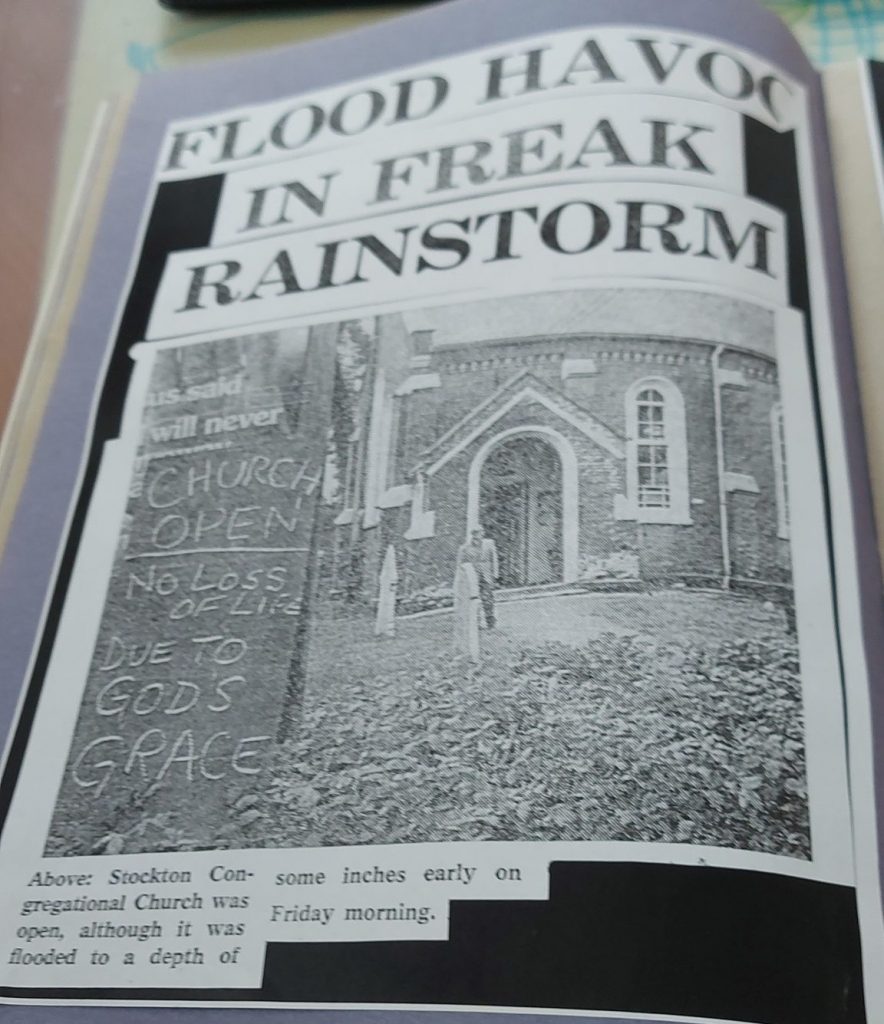
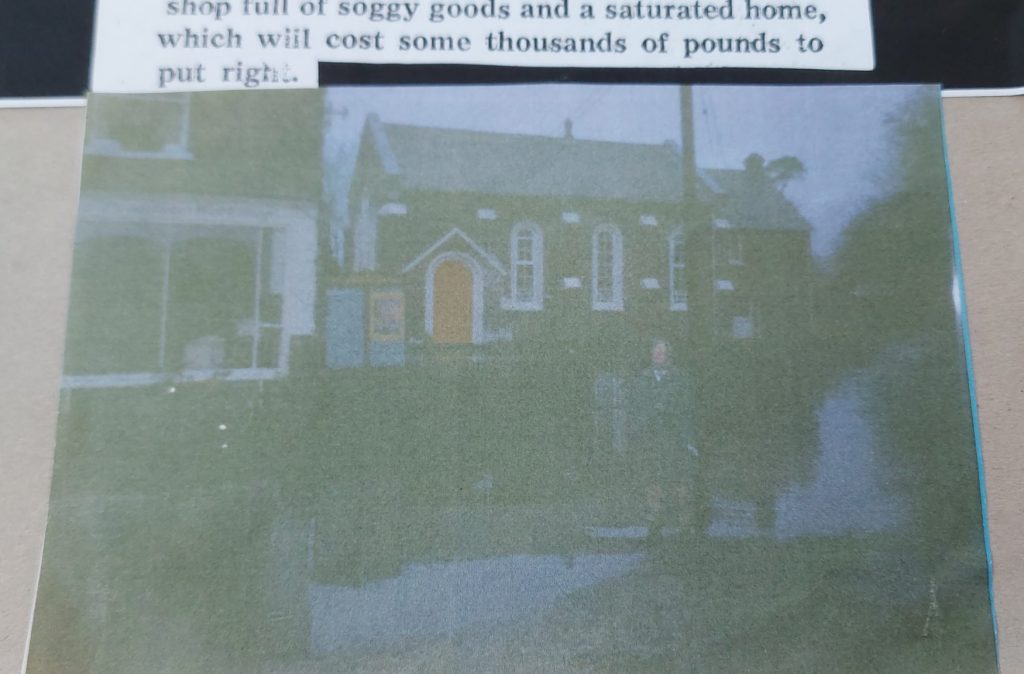
We believe the chapel has flooded only once, on 24th June 1983, the result of several days of rain followed by a heavy thunderstorm. The history booklet records it as flooding to a depth of 4 inches over the floor, although we have also had conflicting reports over this depth. There are no records, reports or (as yet) memories surfacing of it ever having flooded from the adjacent brook – despite this being the highest risk contemporary risk according to the data! This will be a key focus of the future plans to ensure any flooding risk is mitigated.
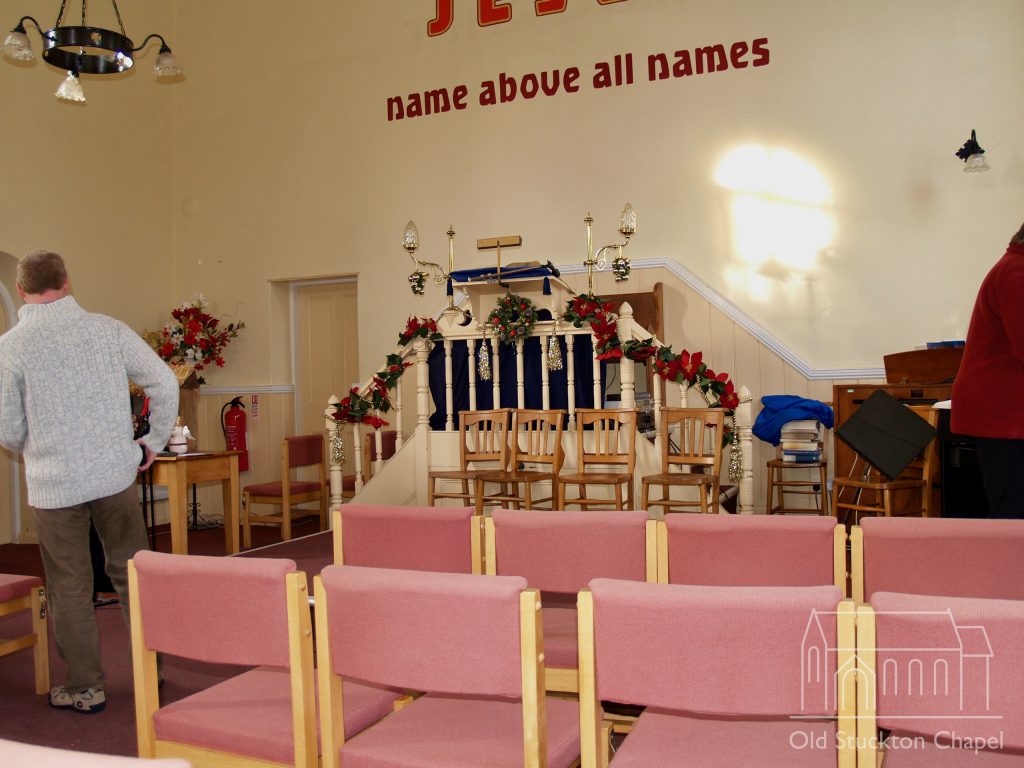
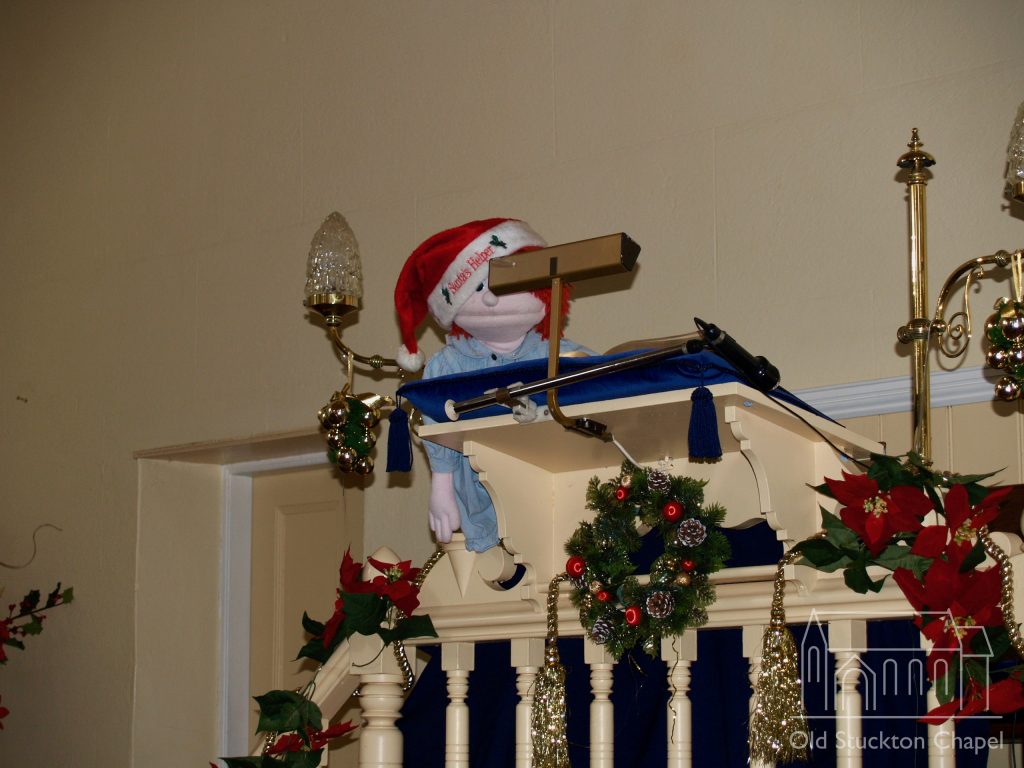
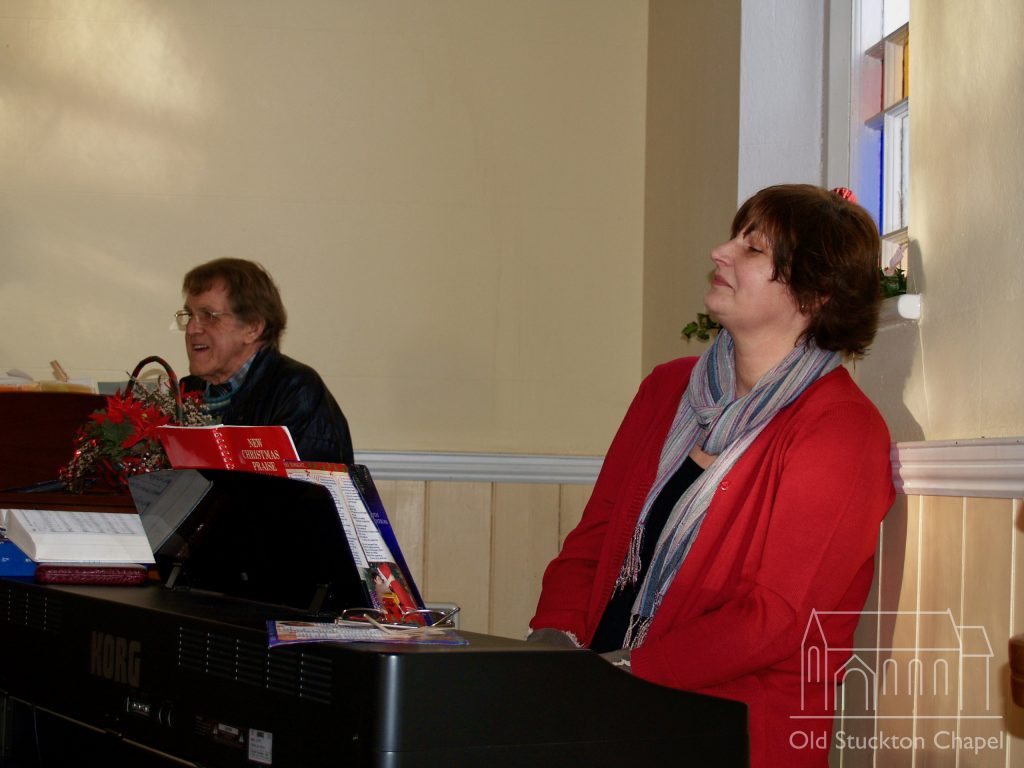
Christmas 2010
The Congregational church in Stuckton was part of a small group with Frogham, Godshill, and Alderholt – this also included Cripplestyle at one time. The churches became members of the Evangelical Fellowship of Congregational Churches (EFCC), cementing them as part of a wider group around the country. During 2010 and 2011 the Congregational church in Alderholt was undergoing a very significant renovation, with the congregation joining the other churches such as Stuckton. The pictures below were kindly provided by Adrian King, and are taken on Christmas Day 2010, when the Alderholt congregation came to worship at Stuckton. The people at the organs are Walt Marlow and Rachel Morgan.
If you have any other photographs of the outside or inside of the chapel, or can help provide information about any of the photos we have here, we would love to hear from you via our contact page.